A daily routine might sound ordinary, but it can be one of the most powerful tools for staying healthy, independent, and joyful as we grow older. For seniors, a consistent schedule provides structure, reduces stress, improves sleep, supports physical health, and keeps the mind sharp. The good news? These benefits are not just for older adults — people of all ages can gain from a steady routine. In this article, we’ll explore why routines matter more than ever in later years and share easy, practical ways to build one that feels natural and enjoyable.
Why a Daily Routine Matters So Much in Old Age
As we age, our bodies and minds can become more sensitive to changes. Small disruptions — like irregular sleep or skipped meals — can lead to fatigue, mood swings, or even higher risk of falls. A gentle, predictable routine acts like an anchor:
- It gives a sense of purpose and control
- It helps regulate body clocks (circadian rhythm)
- It makes it easier to remember medications or appointments
- It reduces decision fatigue (“What should I do next?”)
- It creates opportunities for movement, connection, and rest
Even young adults and busy parents benefit from routines — they lower anxiety, boost productivity, and create more time for what truly matters.
Sample Daily Routine for Seniors (Flexible & Easy to Adapt)
This is a gentle example — adjust times and activities to fit your energy, health, and preferences.
6:30–7:30 AM – Wake Up & Morning Light
Open curtains, drink a glass of water, and spend 5–10 minutes in gentle sunlight (great for Vitamin D and mood).
7:30–8:30 AM – Gentle Movement
Try 10–20 minutes of light activity:
- Chair yoga or stretching
- Short indoor walk
- Simple arm circles and leg lifts
Look how comfortable and effective gentle yoga can be at home:

8:30–9:30 AM – Breakfast & Quiet Time
Eat a nutritious, easy meal (oats with fruits, idli-sambar, or poha). Then enjoy reading the newspaper, a book, or listening to favorite music.
A peaceful morning read with tea or coffee brings calm:

9:30 AM–12:00 PM – Productive or Social Time
Light household tasks, gardening, phone calls with family, or hobbies like knitting/writing.
12:00–2:00 PM – Lunch & Rest
Have a balanced lunch (rice, dal, veggies, fish or curd). Take a short nap (20–30 minutes) if needed — it refreshes without disturbing night sleep.
2:00–5:00 PM – Light Activity & Hobbies
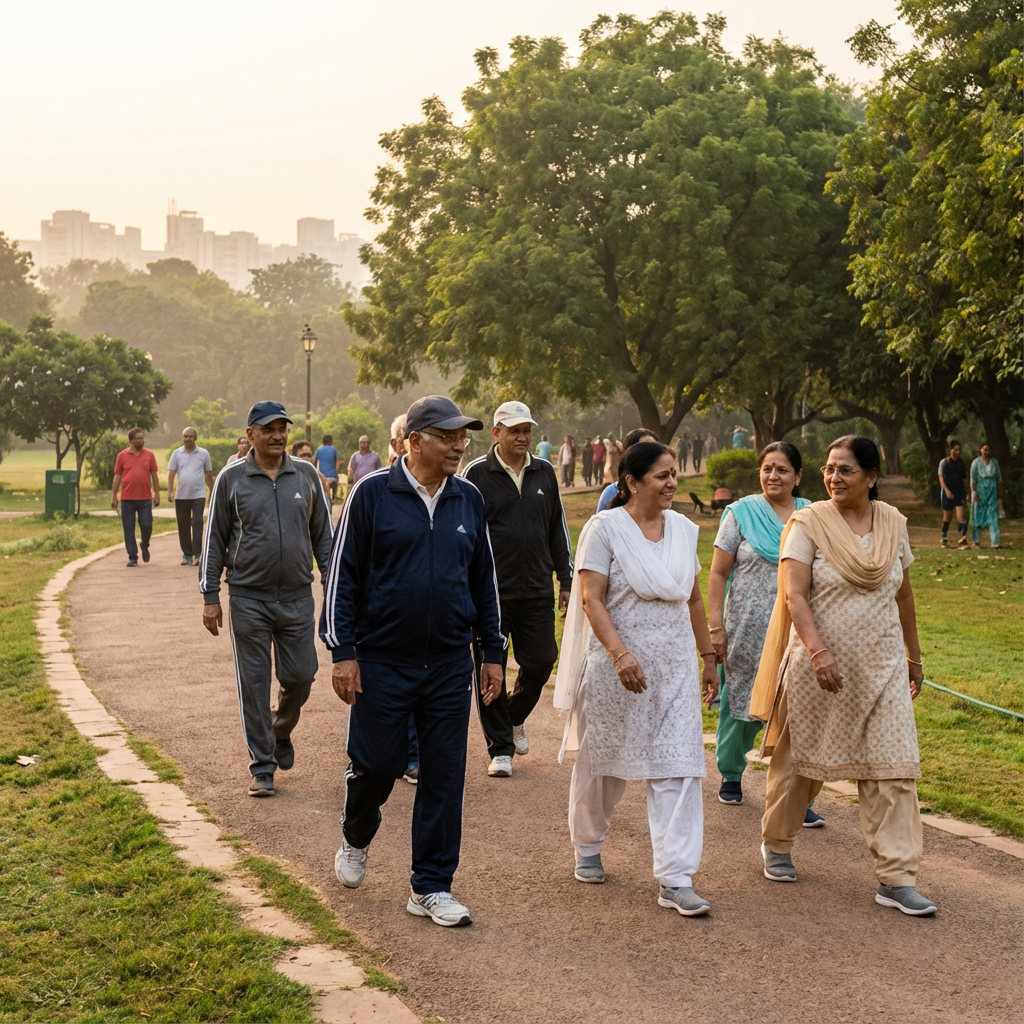
Walk in the park, meet neighbors, or do indoor exercises. Even a slow stroll outdoors lifts spirits.
Peaceful outdoor walks are perfect for body and mind:
6:00–8:00 PM – Dinner & Family Time
Eat early (helps digestion), then relax with family, watch TV, or share stories.
Family meals bring warmth and connection:

8:30–10:00 PM – Wind Down
Light reading, gentle breathing, herbal tea. Avoid screens 1 hour before bed. Aim for 7–8 hours of sleep.
Quick Tips to Build & Stick to Your Routine
- Start small — Add one new habit at a time (e.g., morning walk first).
- Be flexible — On low-energy days, shorten activities — consistency matters more than perfection.
- Use reminders — Phone alarms or a simple wall chart work well.
- Involve family — Share your routine; they can encourage or join you.
- Celebrate wins — Notice how much better you feel after a week of routine.
Cooking simple, healthy meals is part of a nourishing routine too:
Final Thought
A daily routine is not about being rigid — it’s about creating gentle rhythm that supports your body, mind, and spirit. Whether you’re 30, 60, or 90, a little structure brings more freedom, energy, and peace. Start today with one small change, and watch how it grows into a powerful habit.
Aging with strength and joy is possible — and a steady daily routine is one of the easiest ways to make it happen.
What small routine change will you try first? Share in the comments — your story might inspire someone else!
(Stay tuned on oldageneedhelp.com for more tips on healthy, happy living in later years.) 🌿